
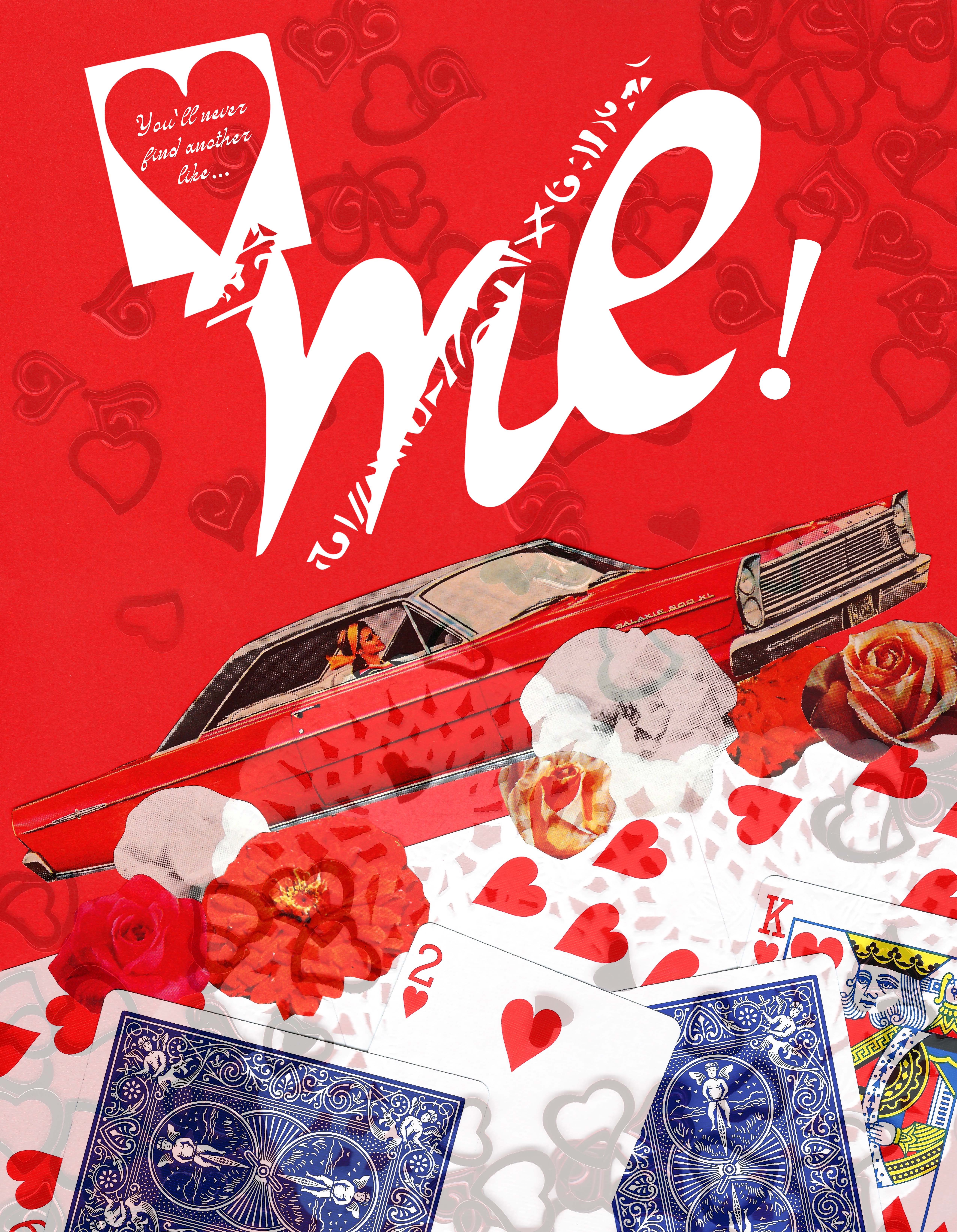
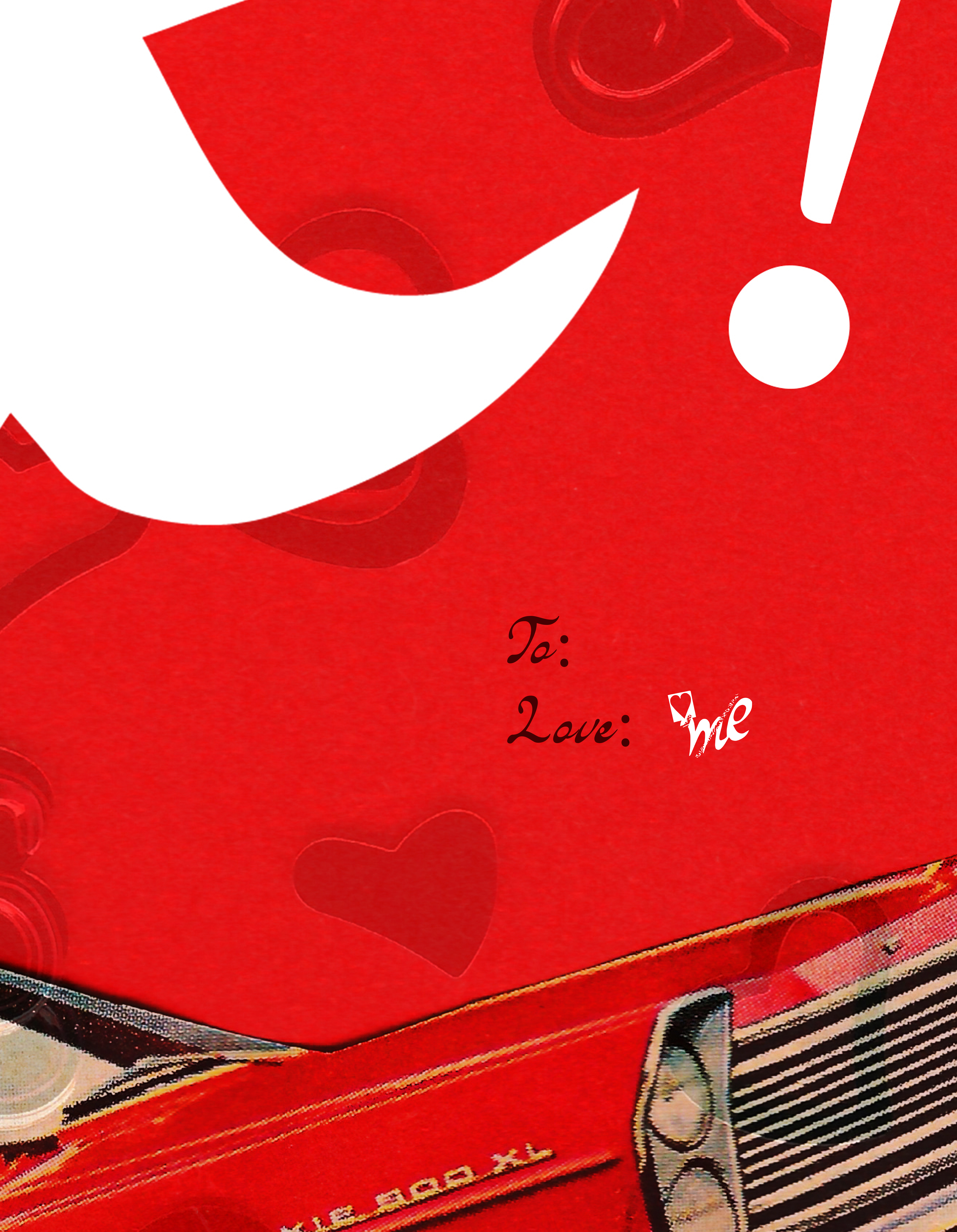
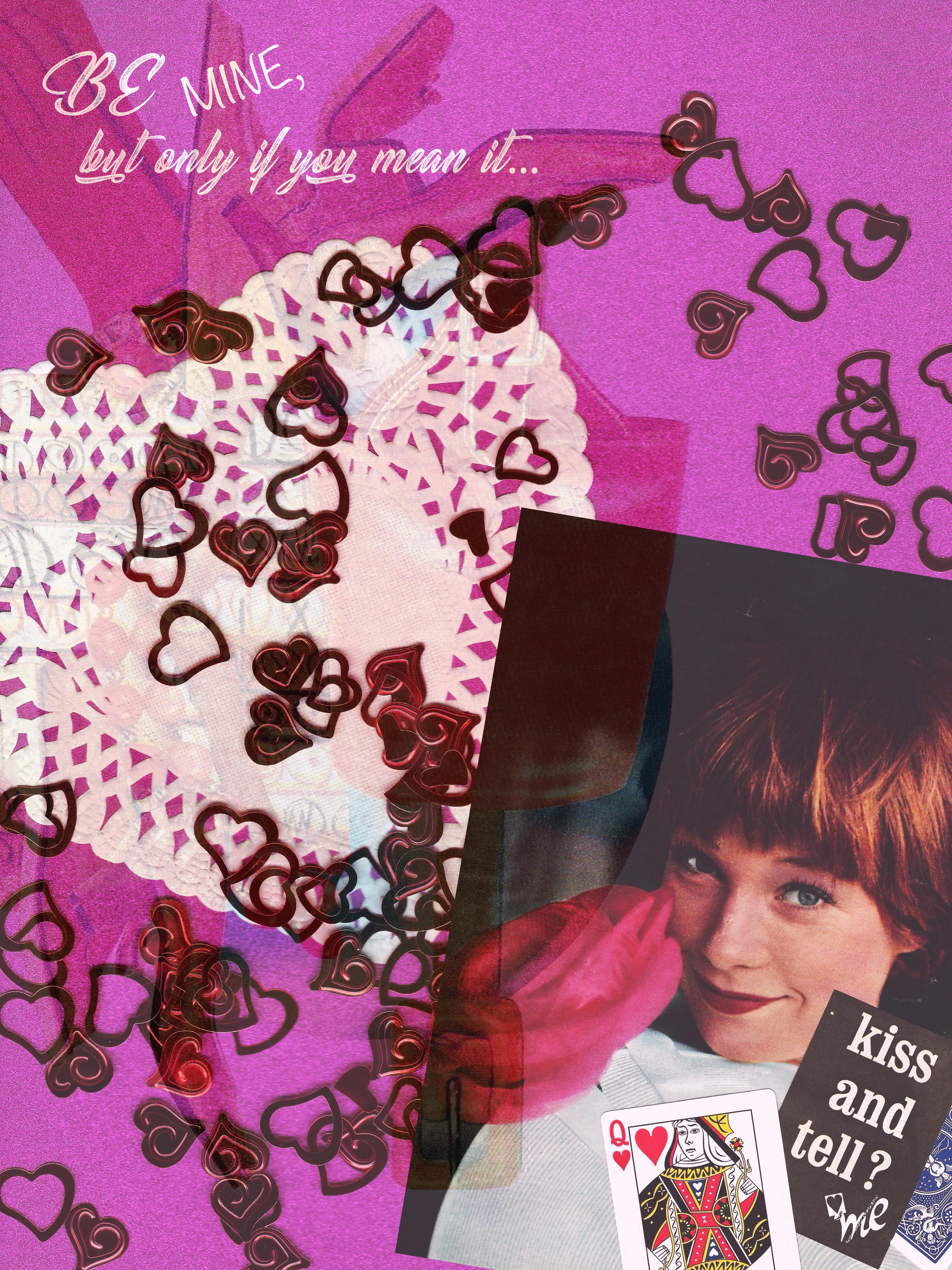
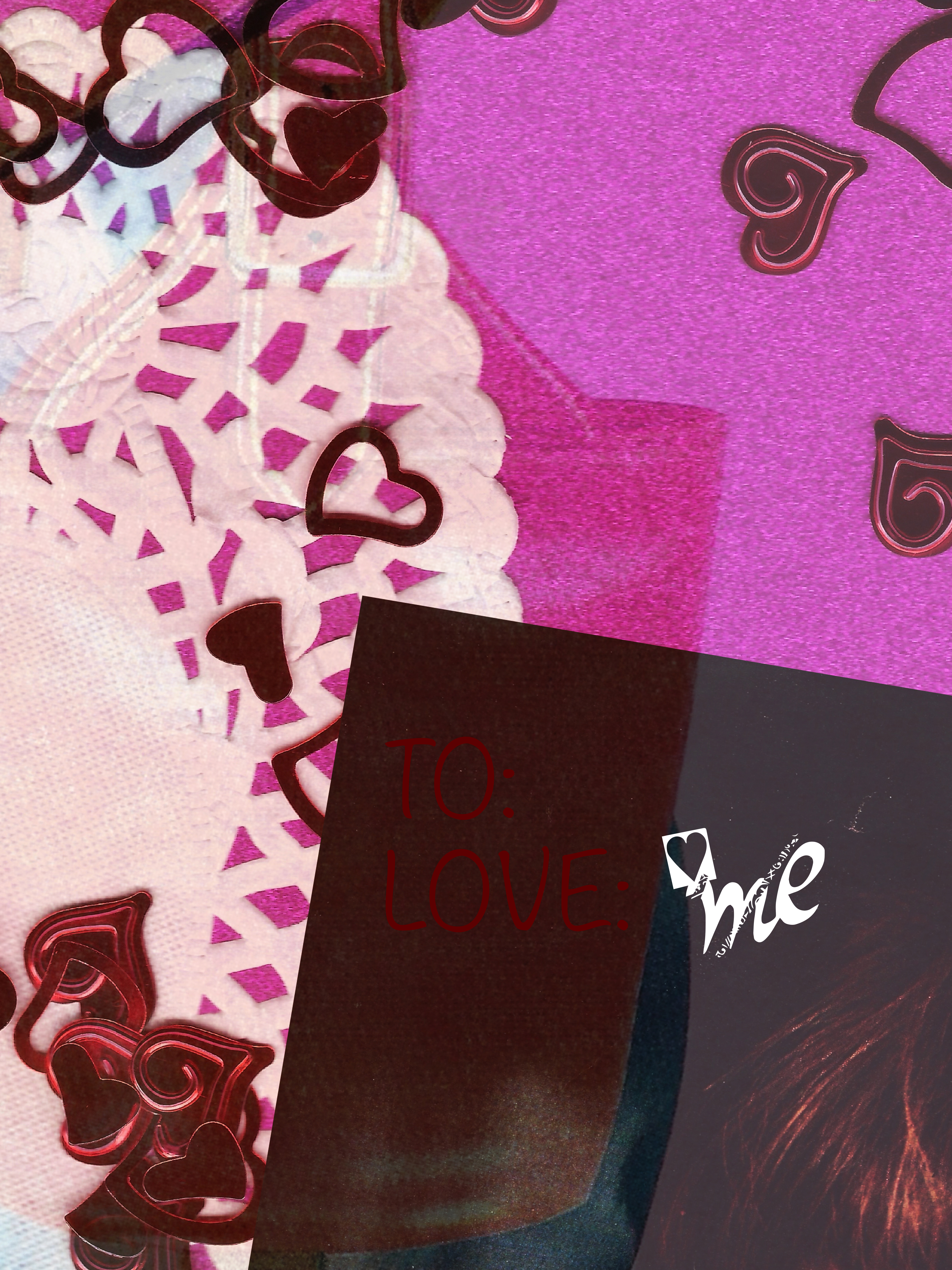
This month contained some artistic and conversational roadblocks in terms of my work. Every month is a new encounter, and every month I go through a period of frustration, orbiting the same system each time. Although it requires time and patience, I work tirelessly to pluck out the learning experiences and growth opportunities like removing thorns from a rose and deciding which petals to keep.
I love the aesthetics of the materials I use. I love the colors. I love the language. I love the pink and I love the glitter. I spent years making corporate, personality-less designs, and now I’m finally making things that are personal through a medium that allows me to show it best visually. Is that not enough?
No, it’s not. Not for higher education.
So I took a break.
I spent all of two weeks writing. Out of fatigue, and probably some denial, I didn’t touch a paintbrush or a glue stick or a pair of scissors, only meeting paper with a pen. I did a lot of digging and “soul-searching,” if you will, into the reasons why I use what I use and what I want to do with that. In my stream of consciousness, I wrote: “I’ve always said, or have been saying, I’m using these vintage magazines for aesthetic and style but also to give the women in them, their typography, the style, even the paper itself, new life. Something about the eyes even, down to their EYES. They allude to some internal conflict of feeling some sort of acceptance for what they think of their fate but society has kind of instilled that into them, they don’t actually feel accepting deep down. They’re just tolerating it enough, just enough. There also seems to be some longing in their expressions, it’s like they’re wanting to scream to me SAVE ME! USE ME! FREE ME! … I feel like I’m freeing them. I feel like I’m freeing them … Maybe I’m just projecting myself and my feelings onto them and this is actually all in my head, I don’t know. Part of me also feels jealous. I’m envious of them. I would love to live in another era for a day, anywhere from the roaring 20s to the Monica Geller 90s.”
This project began as something small and whimsical.
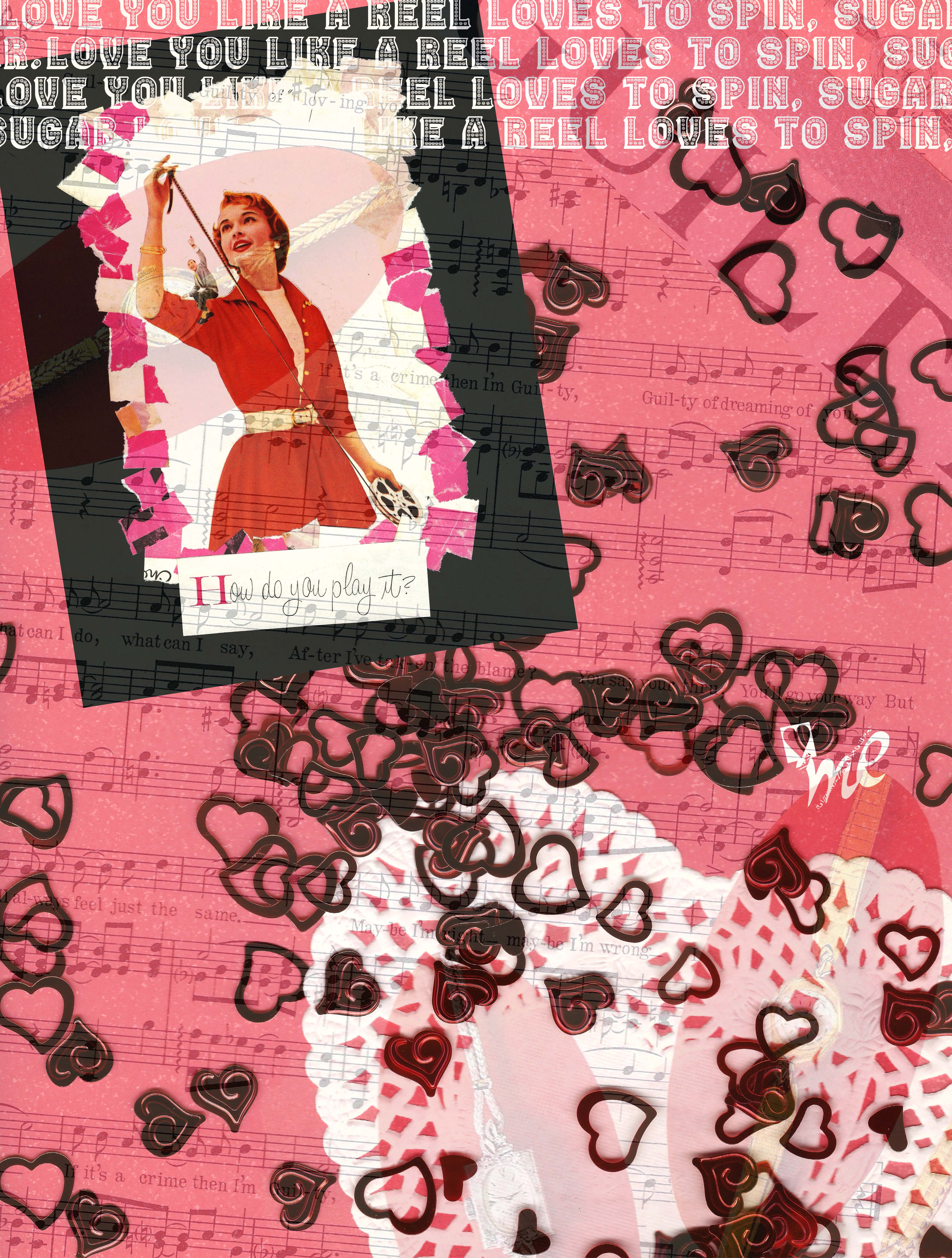
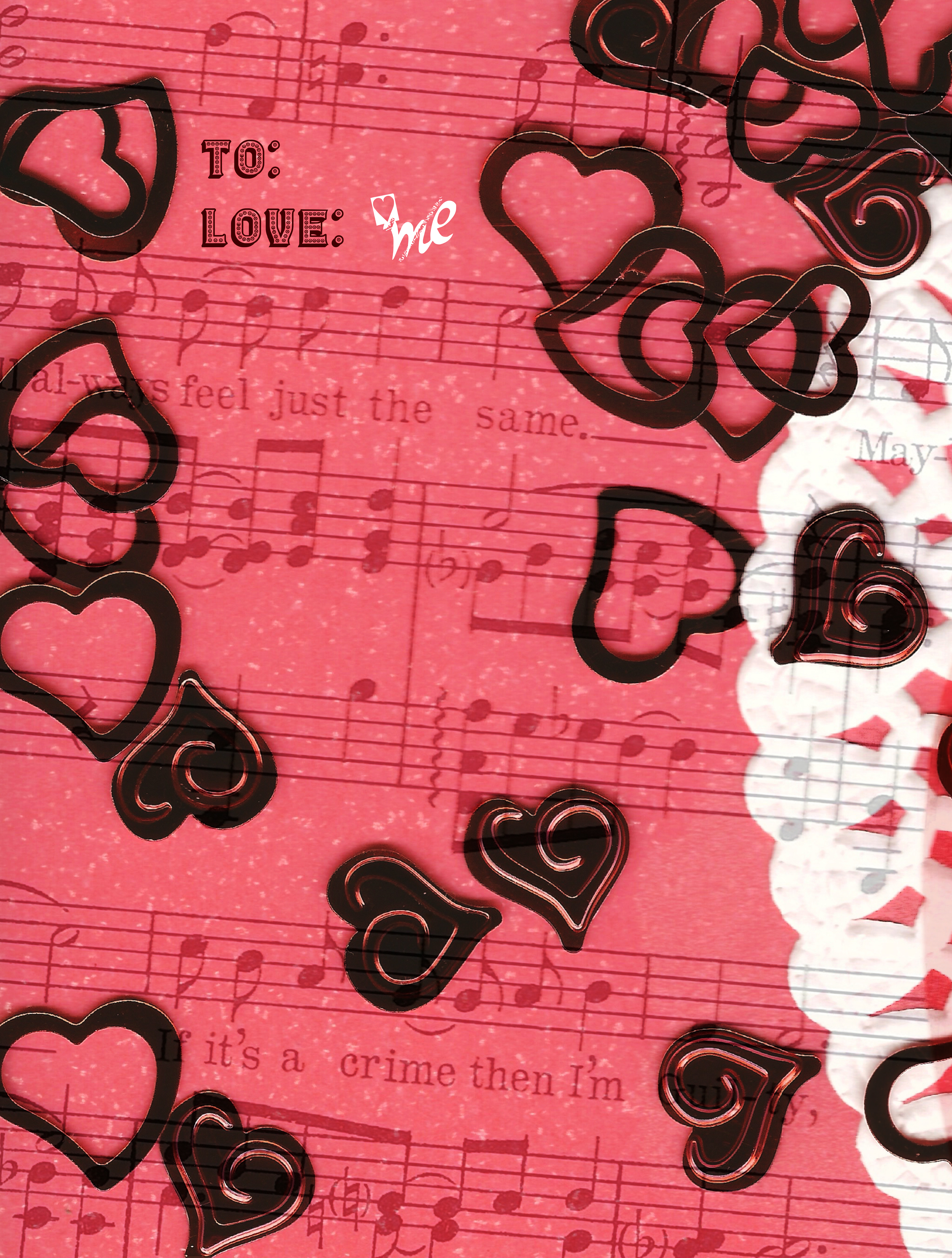
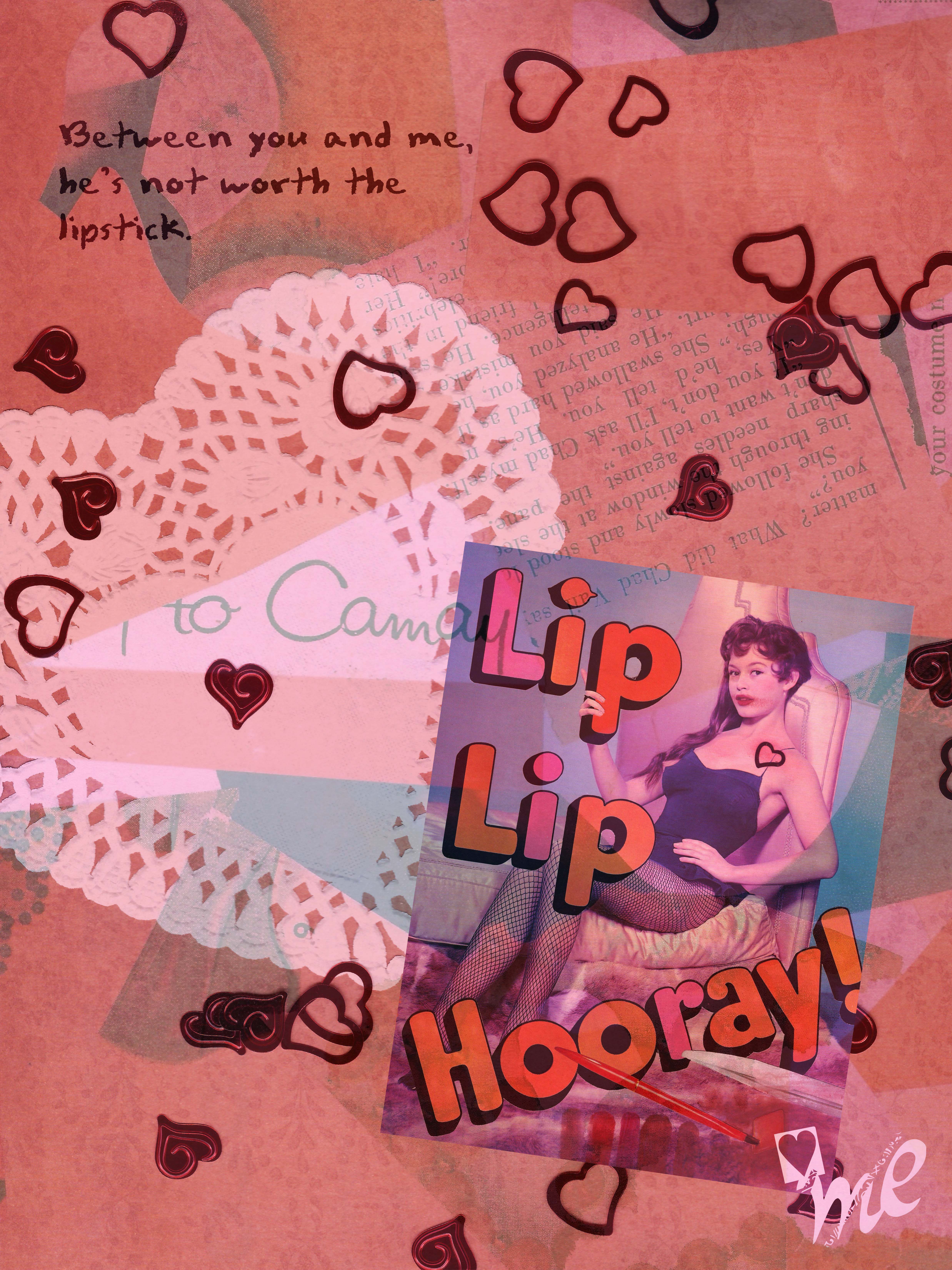
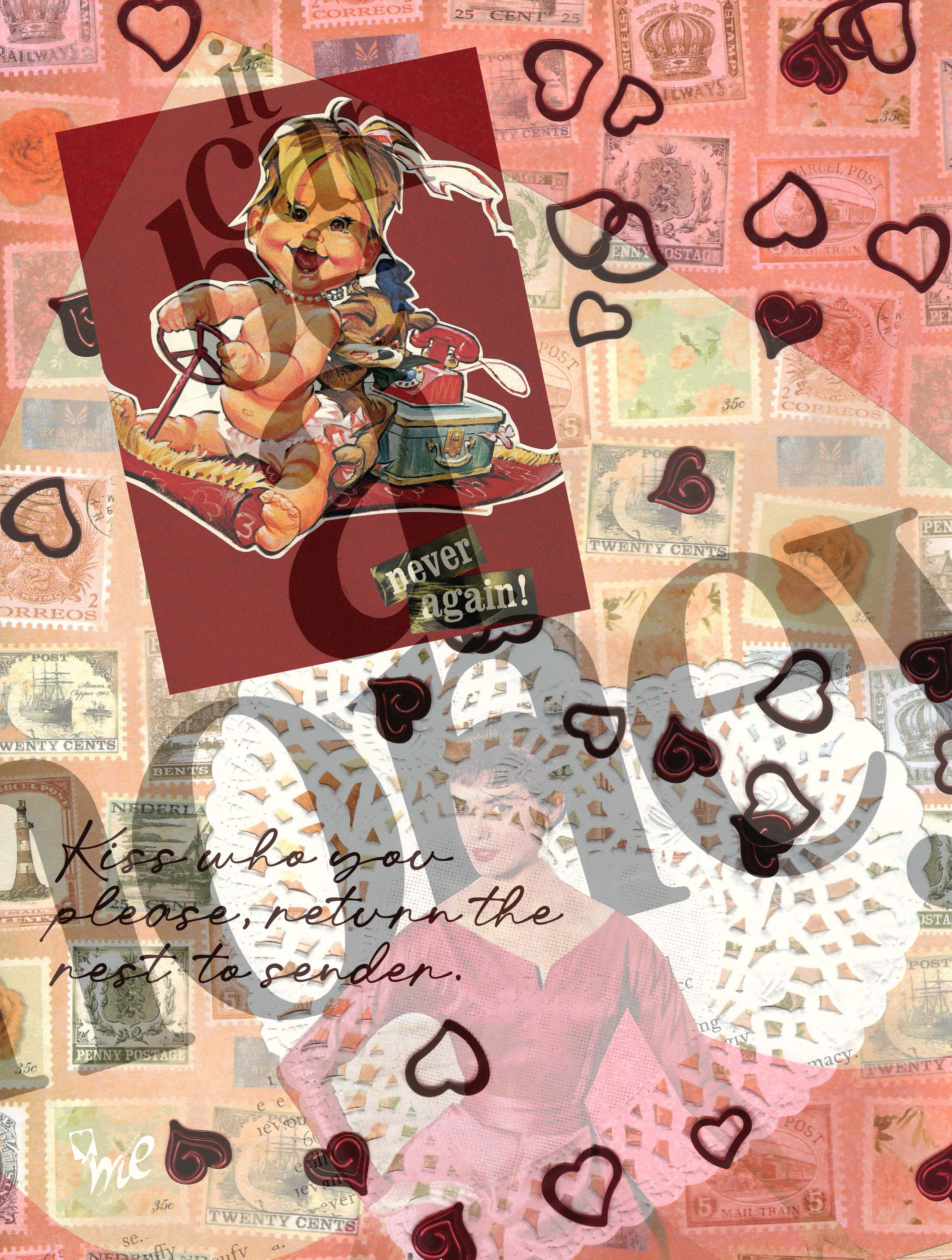
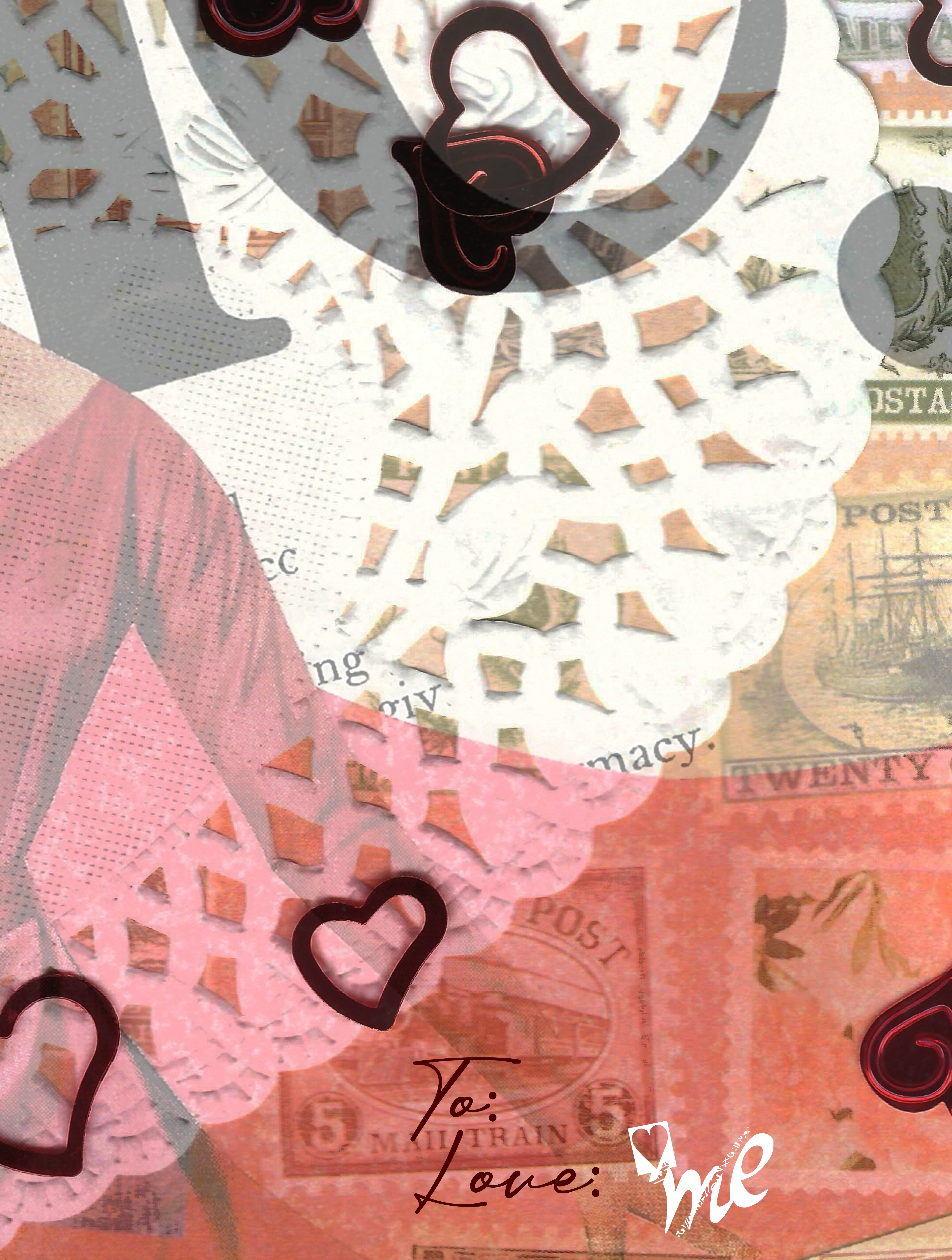
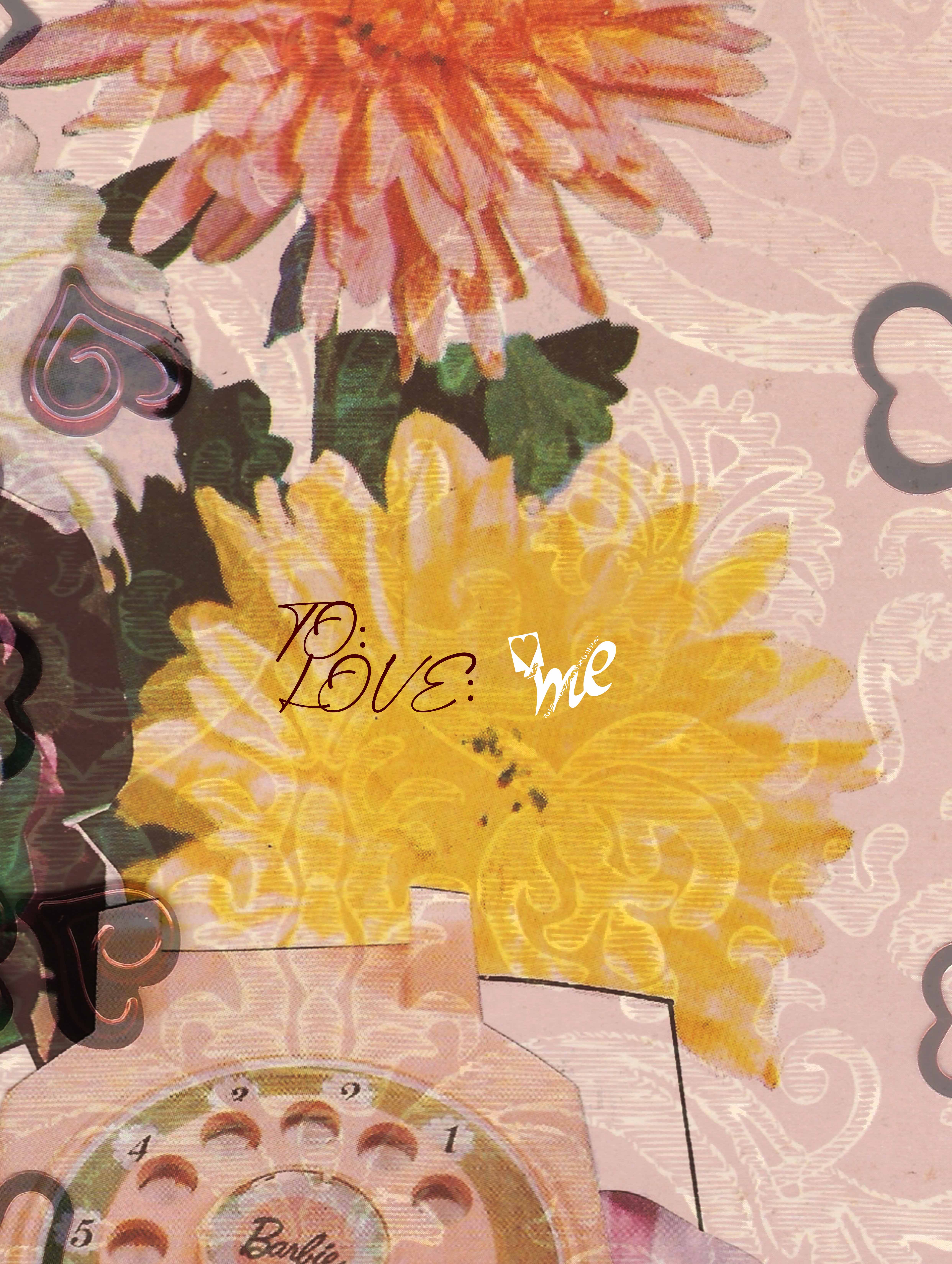
Amidst its emotionally creative strength, making something centered around love has been and can be daunting. It usually turns into a poetically composed story of reflective sadness, so I approached this month’s collection, “LOVE, M/E,” with only the heart for hot pinks, pretty flowers, and lustrous sparkles. But the more I worked, the more it became a conversation that stretched across decades, across paper surfaces, across the space between myself and women I will never meet but feel as though I already know everything about.
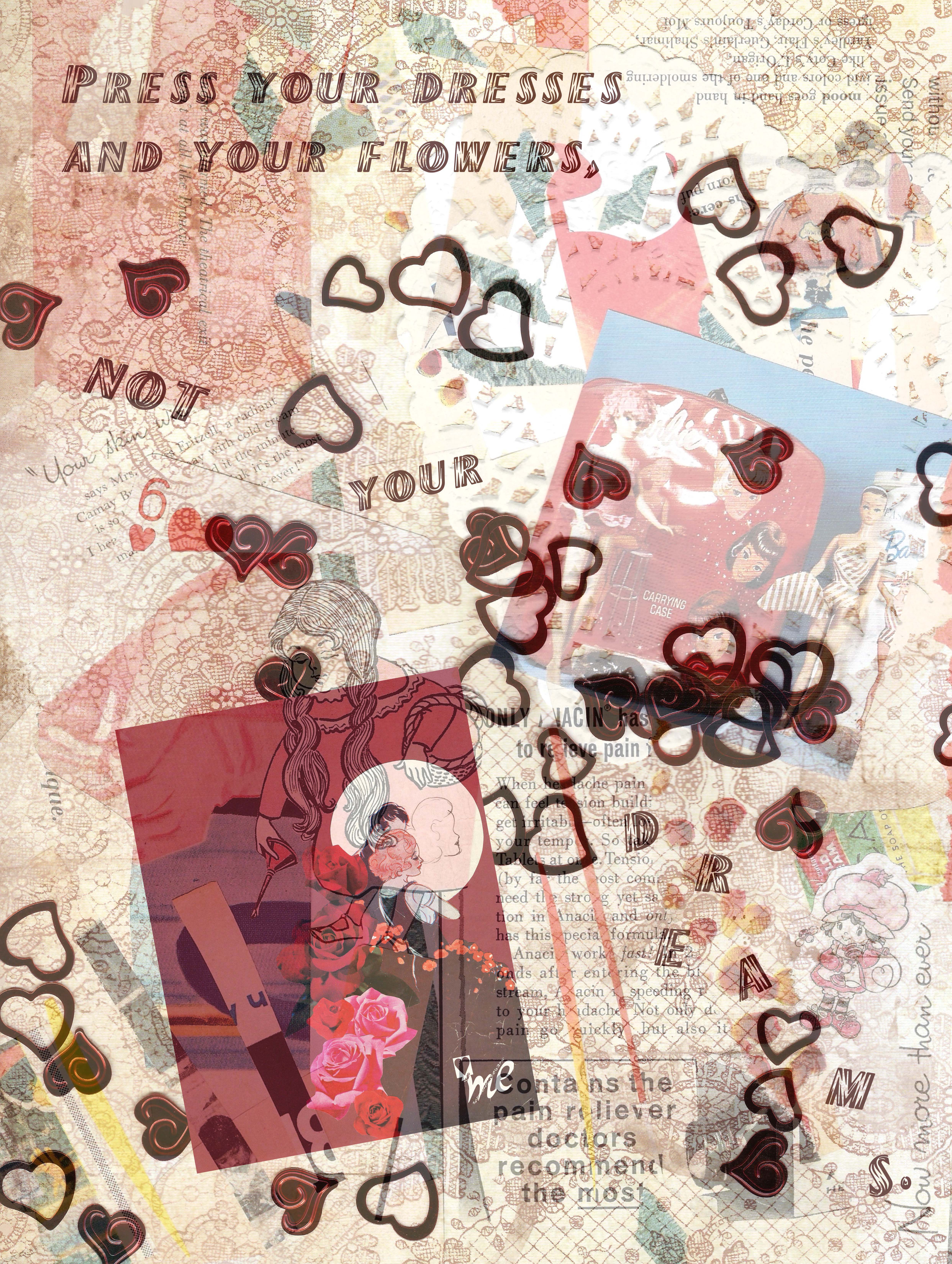
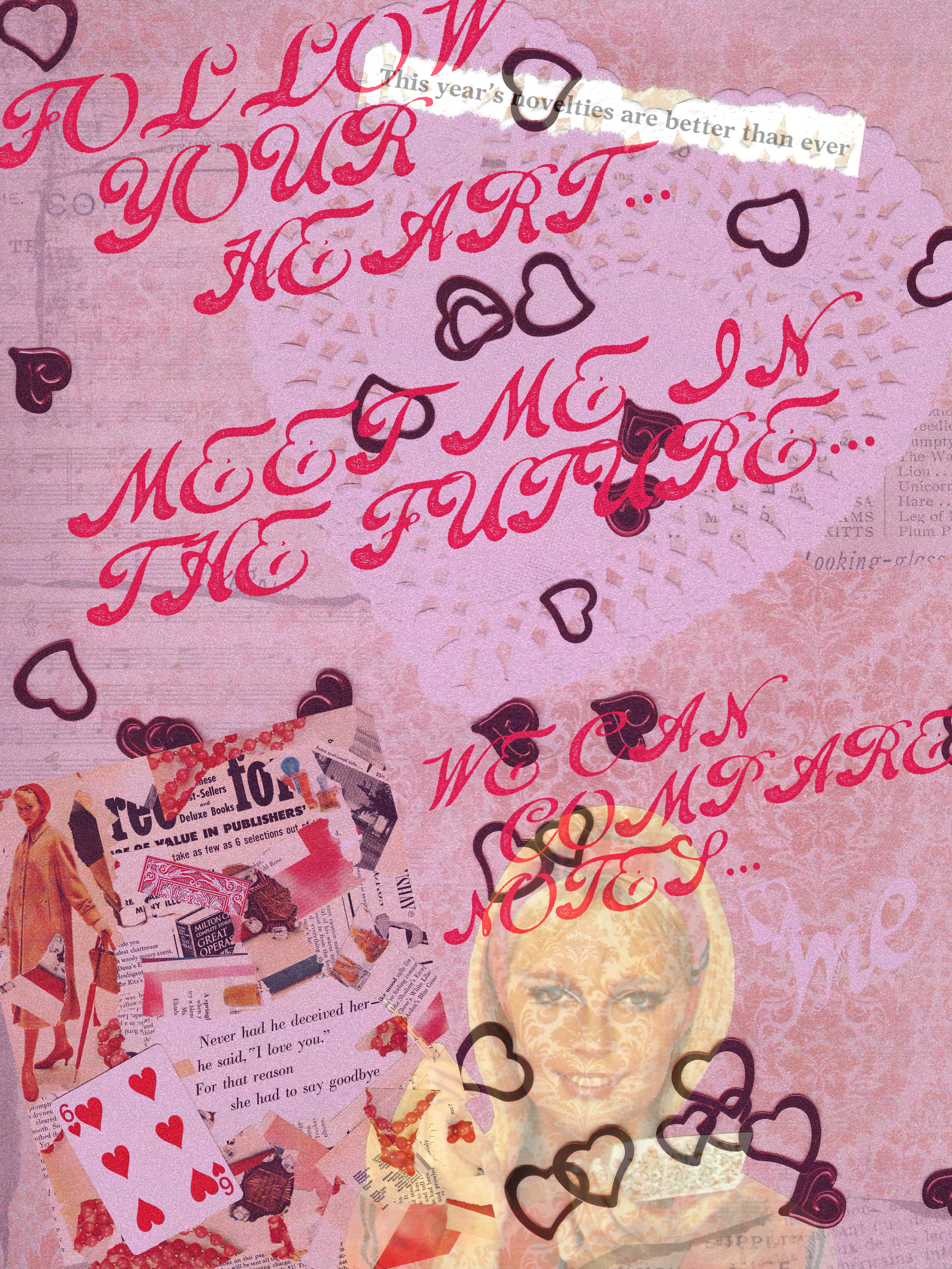
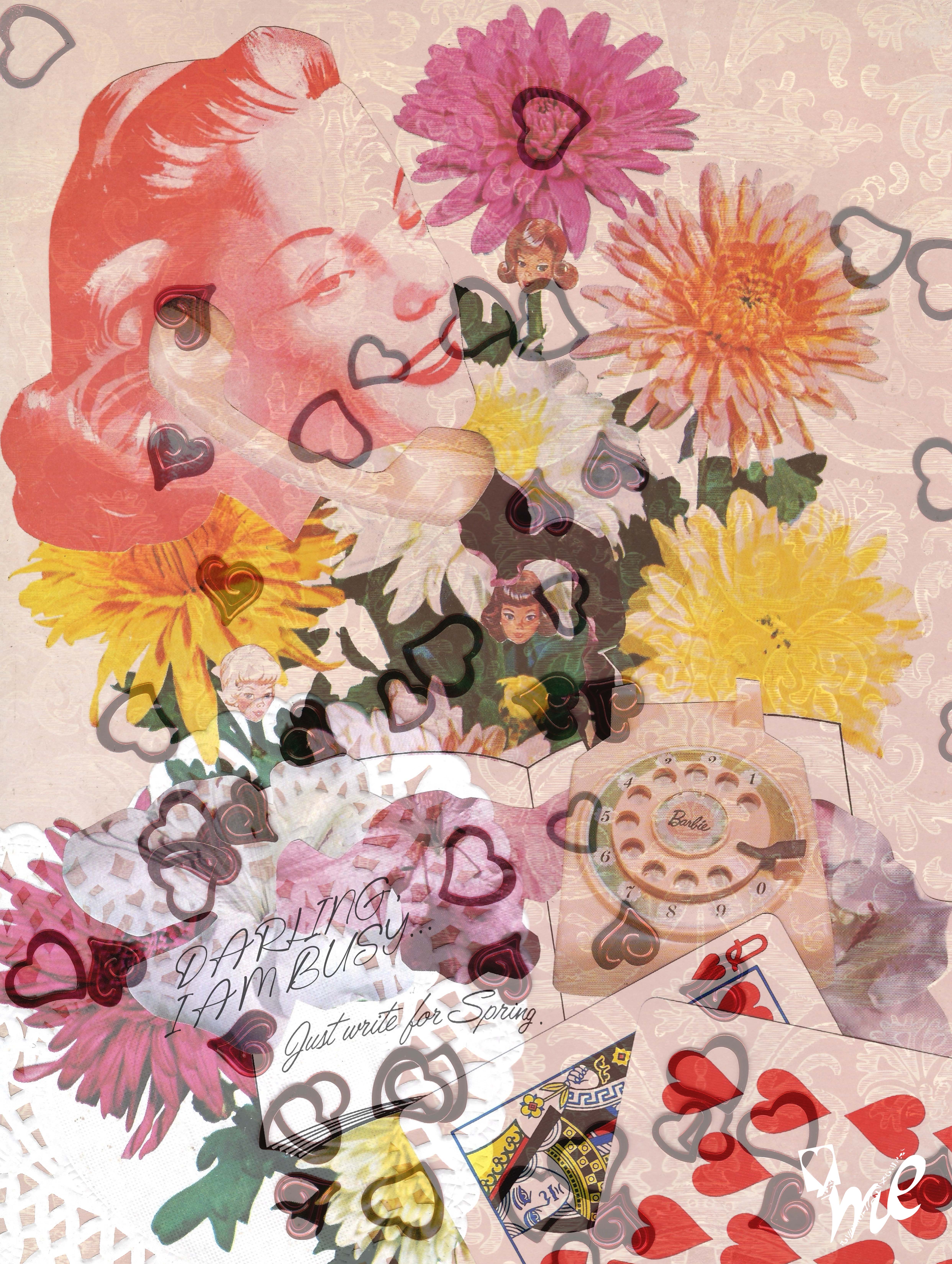
Using vintage magazines as my source material, I collage together images of women whose lives were once flattened into advertisements, editorials, or carefully staged domestic fantasies. They smile out from curling pages, mid-laughter, mid-pose, mid-performance. They were printed to sell a lifestyle, a product, an ideal of femininity. Their gestures feel rehearsed, their roles prescribed. And yet, when isolated and reassembled, they begin to feel even more human than I do.
My valentines are letters to them.
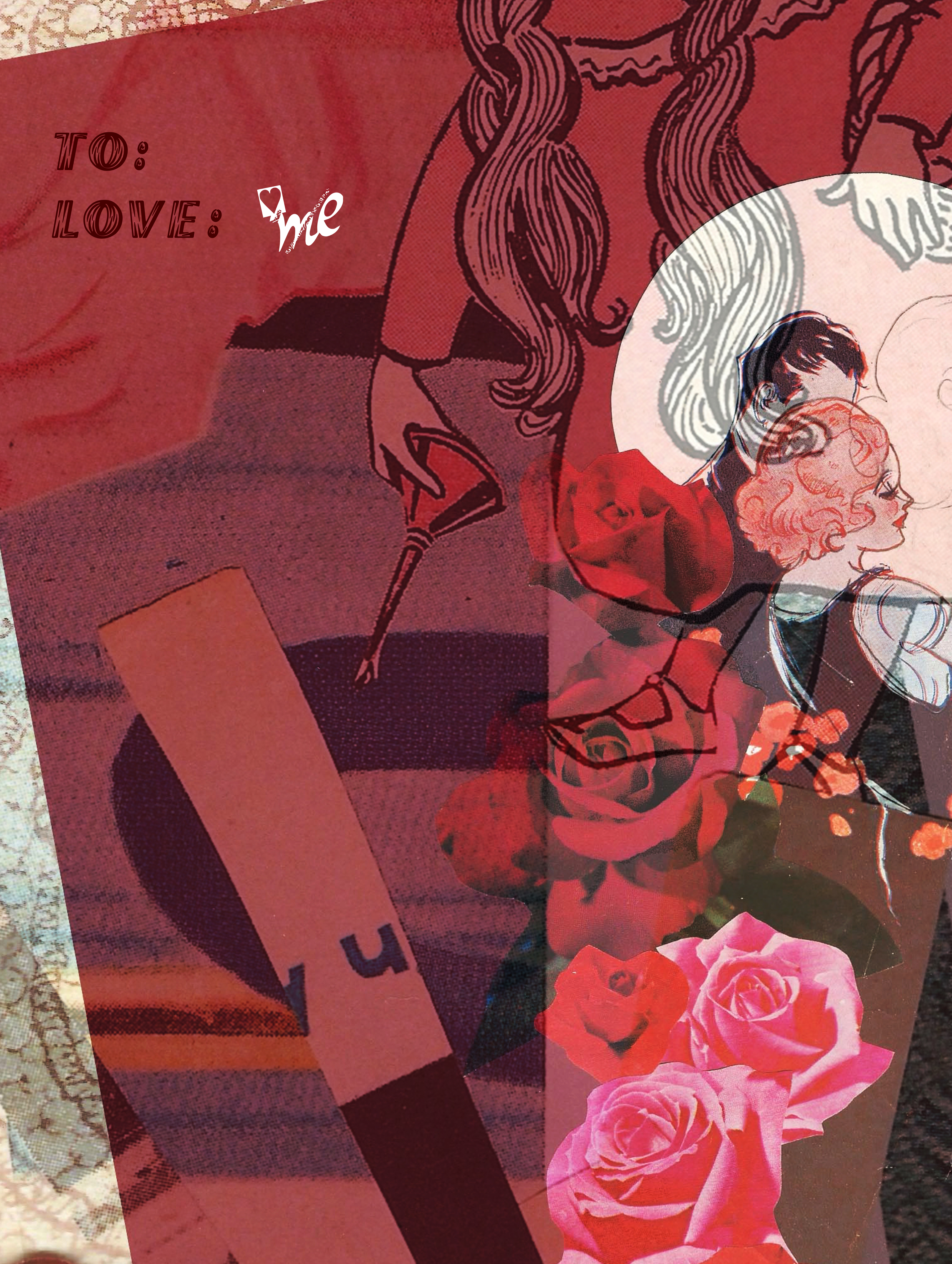
Each collage becomes both a portrait and a small offering written from a modern perspective. I speak to them the way I might speak to a friend, tenderly, honestly, sometimes protectively. I tell them the things I wish they could know now. That they don’t have to be agreeable. That they’re allowed to want more. That their bodies are not advertisements. That love can be expansive rather than transactional. That they deserved freedom long before it was marketed to them.
At the same time, I recognize myself.
Despite the decades between us, the pressures feel familiar. Be desirable without being too much, embody independence without intimidation, accomplish beauty without trying too hard. The magazines promise ease and perfection, but in their expressions I see exhaustion, hope, performance, and longing. The valentines become less like messages sent backward in time and more like mirrors.
Collage feels essential to this exchange. Cutting, rearranging, and layering disrupts the authority of the original image. It allows me to reclaim these women from the narratives that first contained them. By fragmenting the page, I give them new agency. By writing directly onto the surface, I interrupt the language of advertising with something intimate, while also preserving the cheekiness and absurd sincerity I admire in them so much.
A valentine is typically romantic, sentimental, even cliché. I’m interested in that softness. I want to use the format not ironically, but earnestly. Care can be radical. Addressing these women with love—rather than critique alone—feels like a small act of repaired freedom.
These works aren’t meant to fix the past. They’re gestures of solidarity. Little notes slipped between eras. Proof that someone, that I, see them now.
If they could read these letters, I hope they’d recognize what I’m trying to say, that they were always more than the page they were printed on. And maybe, in writing to them, I’m reminding myself of the same thing.
Anyway, this project has actually become my favorite so far. Not because it was easy, but because it asked the most of me and gave the most back. The colors feel brighter, the gestures more tender, the conversations more real. What started small and whimsical grew into something expansive and sincere. It reminded me that growth doesn’t always look like constant production. In the end, that pause didn’t set me back at all, and I’m super excited for what I have coming up.
Until then, in the wise words of my final valentine from the collection: “Darling, I am busy. Just write for spring.”
LOVE,
M/E.
 MIMESIS/EKPHRASIS